All work iqplay
Design & product · 2026
iqplay
A platform for club tennis with one shared rating and several tournament formats.
Amateur players get one measure of ability they can all agree on, and a tournament that fills up and is over by the evening.
By the numbers
The problem
Club tennis lives in group chats. Players name their own level, so the only way to settle who is stronger is to play; tournaments get assembled in messages, the draw ends up in somebody's notebook, and by the following week nobody can find the results. The client wanted one place where a rating falls out of the matches people actually play, and where a one-day event does not depend on a single heroic organiser.
Nothing existed yet — no backend, no data, no users. The fights worth having were about rules, not code. How far should beating a stronger opponent move you? What happens to the beginner who talked up their level at sign-up? Who confirms a score, and what if the two players remember it differently? Questions like those are cheap to settle on screens and expensive to settle in migrations. Hence the prototype.
The solution
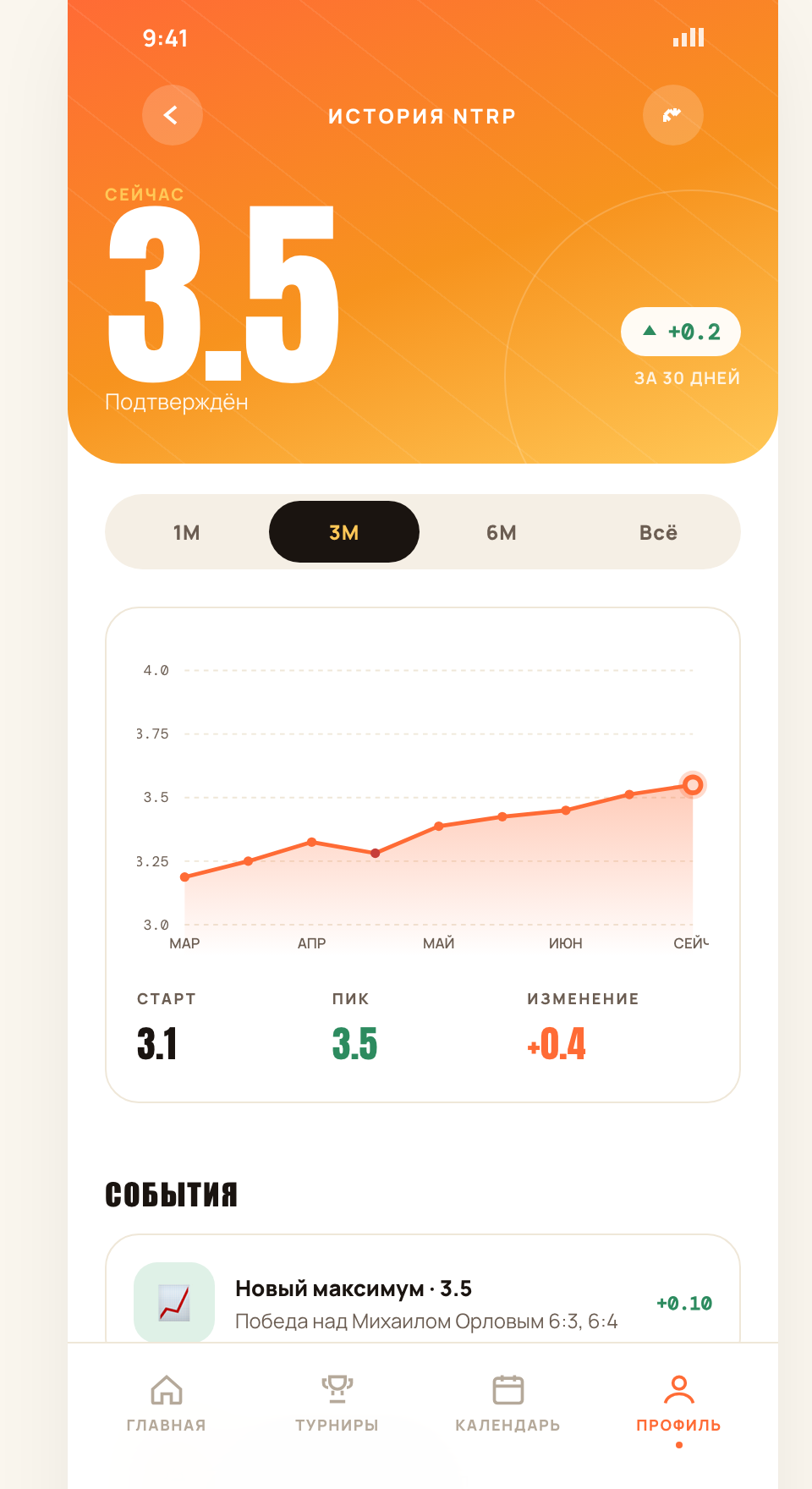
Two numbers carry the rating: a continuous value on the NTRP axis, and a Glicko-2-style deviation beside it. The deviation governs how far one match can move a player, and when calibration ends — better than a single figure nobody can account for.
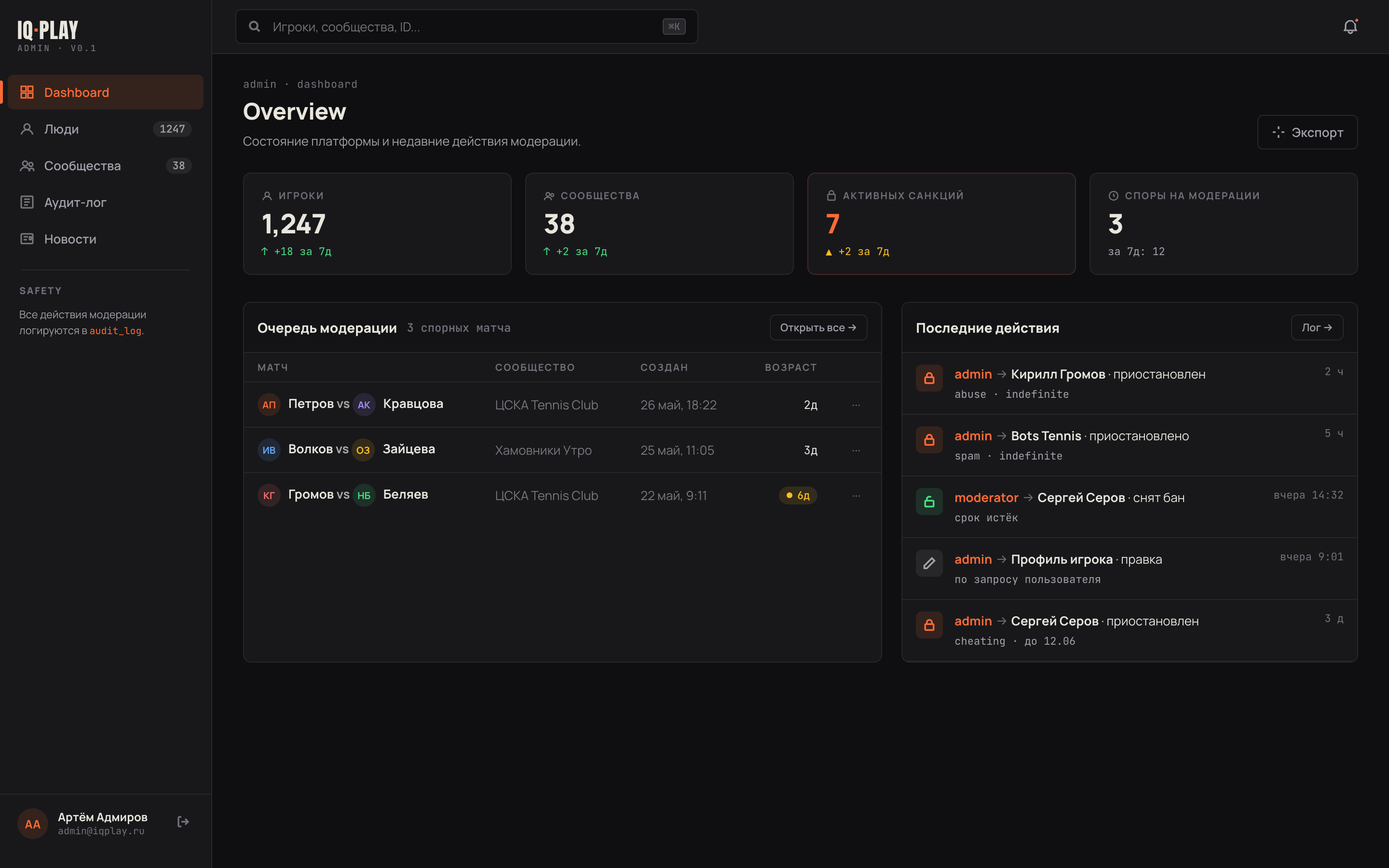
One player enters the score, the other confirms it. Nothing reaches the rating unconfirmed. A disputed match goes to the moderation queue in the admin panel, and every action a moderator takes is written to an audit log.
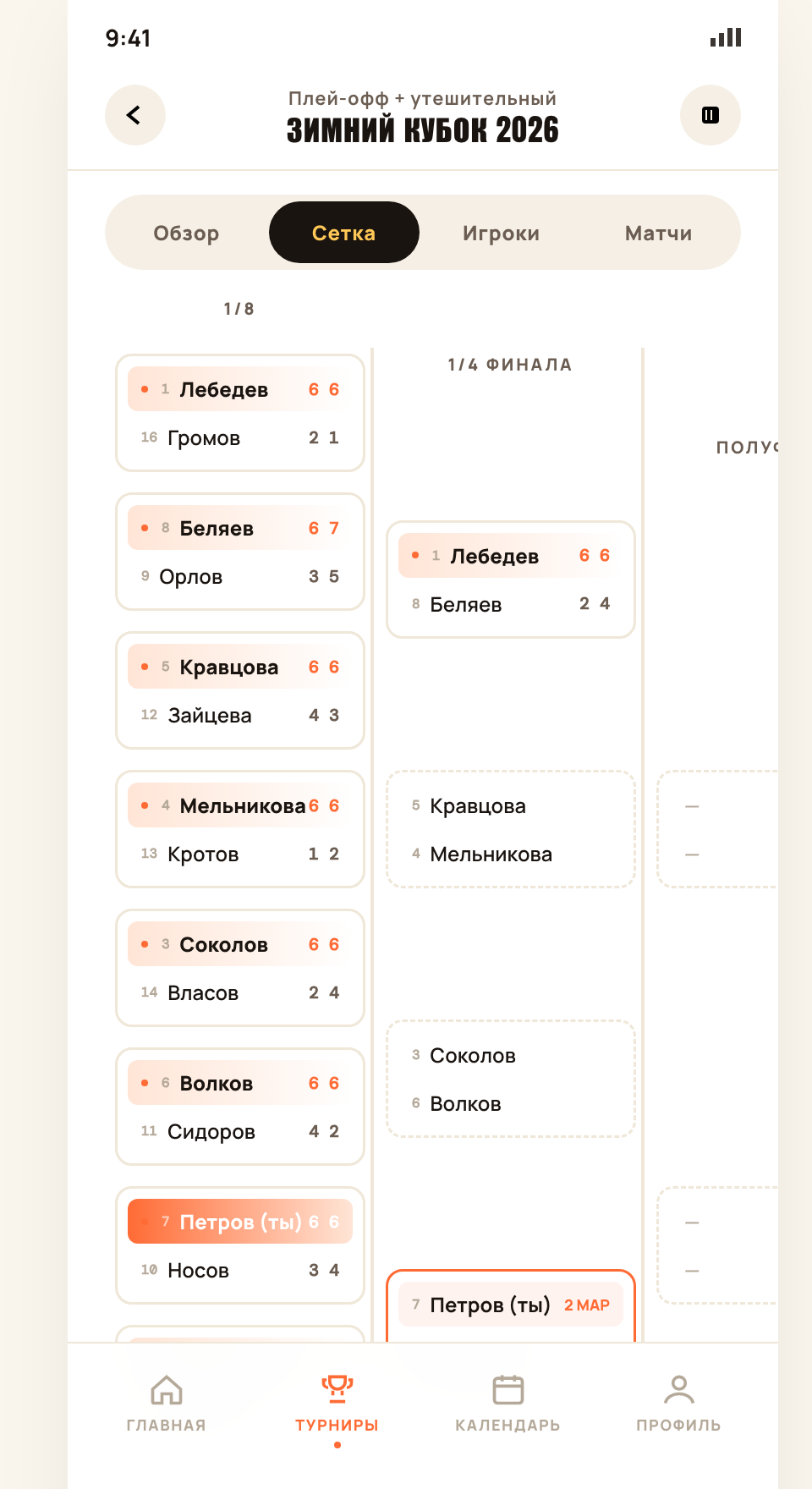
Single elimination, group stage into playoffs, and Swiss all sit on one bracket model. Seeding, round transitions and consolation matches behave identically whichever format the organiser picked.
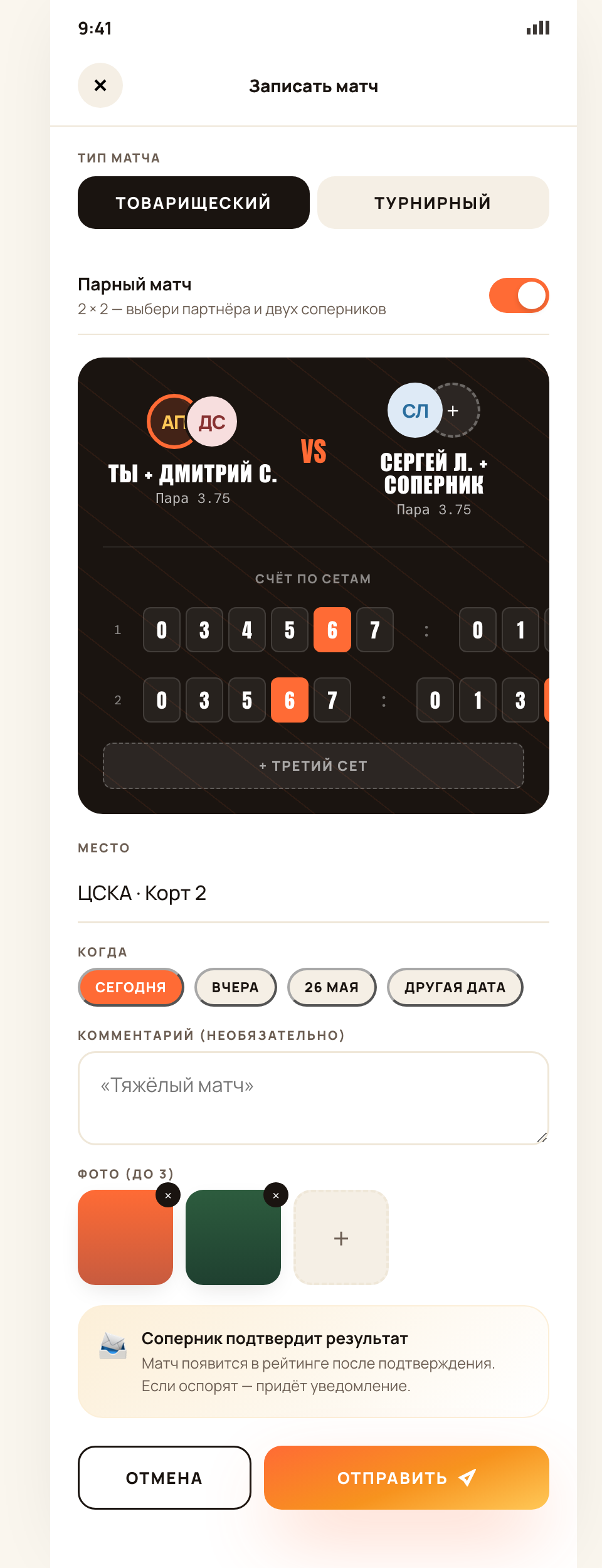
Singles and doubles are filed on the same screen. A pair carries a level of its own, the score goes in set by set, and the court and the photos attach to the record.
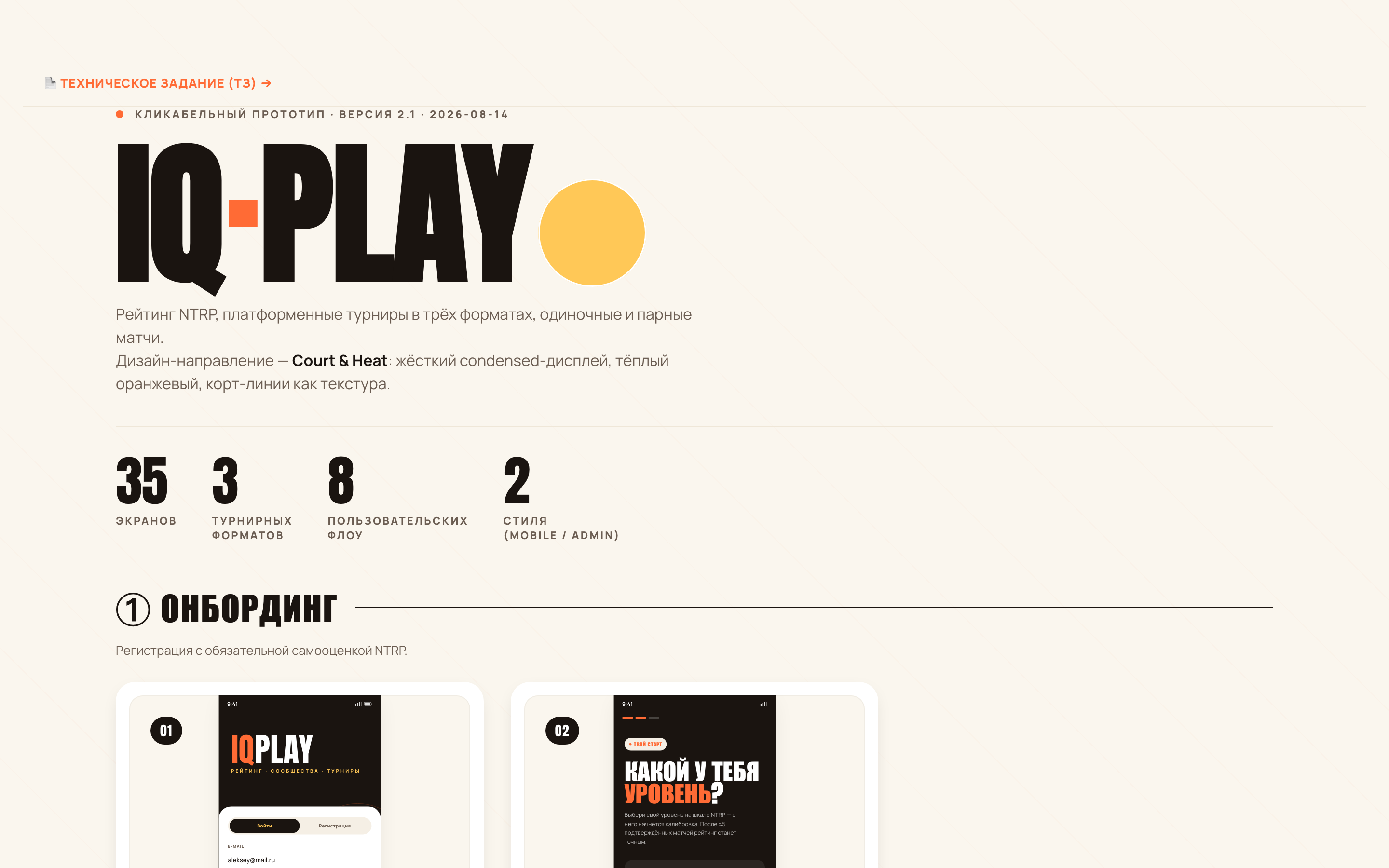
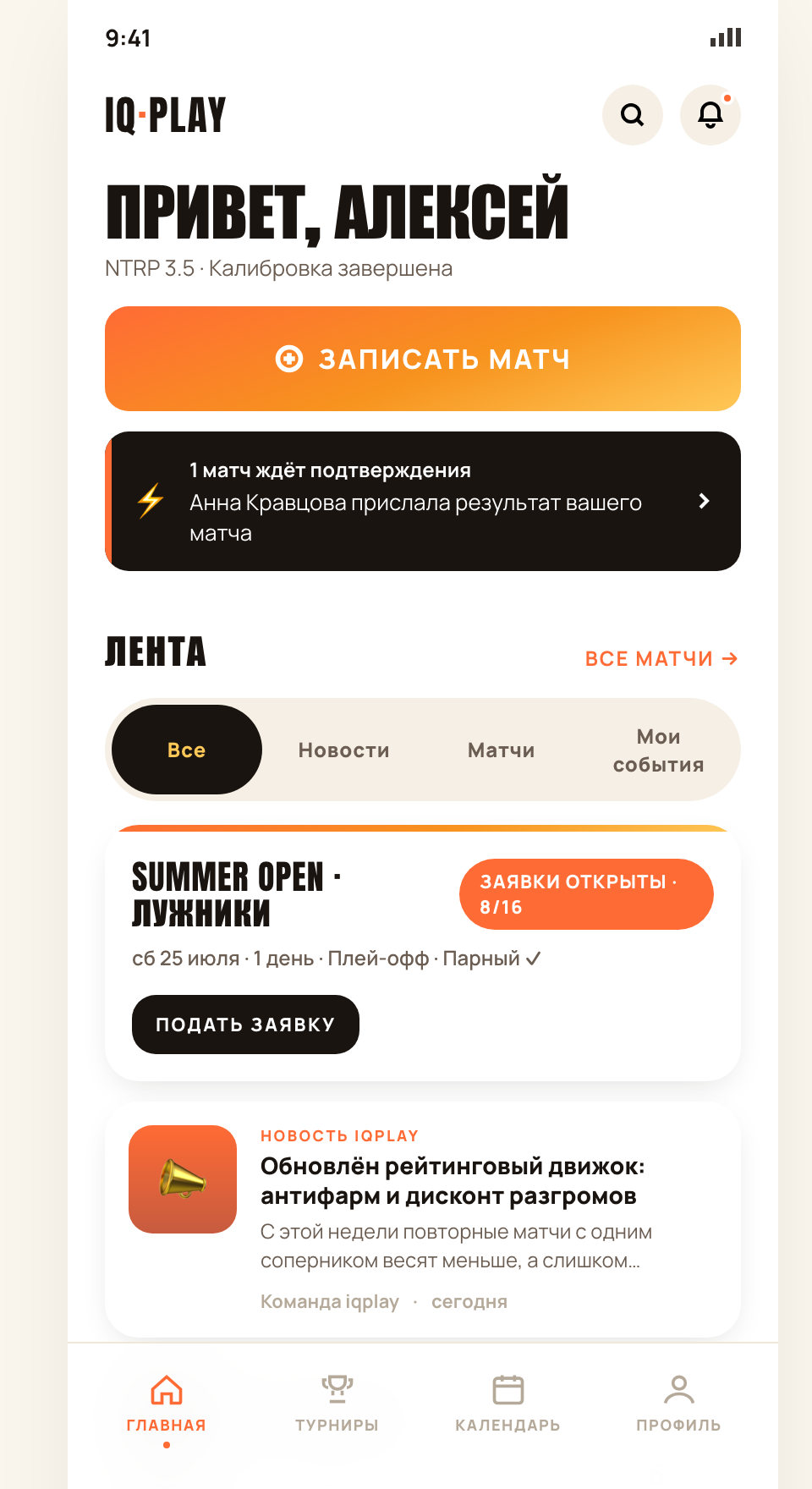
One prototype holds two visual languages: the player's mobile app and the platform's desktop admin. Its 35 screens are wired into eight end-to-end flows, so it gets walked like a product instead of flipped through like a deck of mockups.
Screens