All work aura
Design & product · 2026
aura
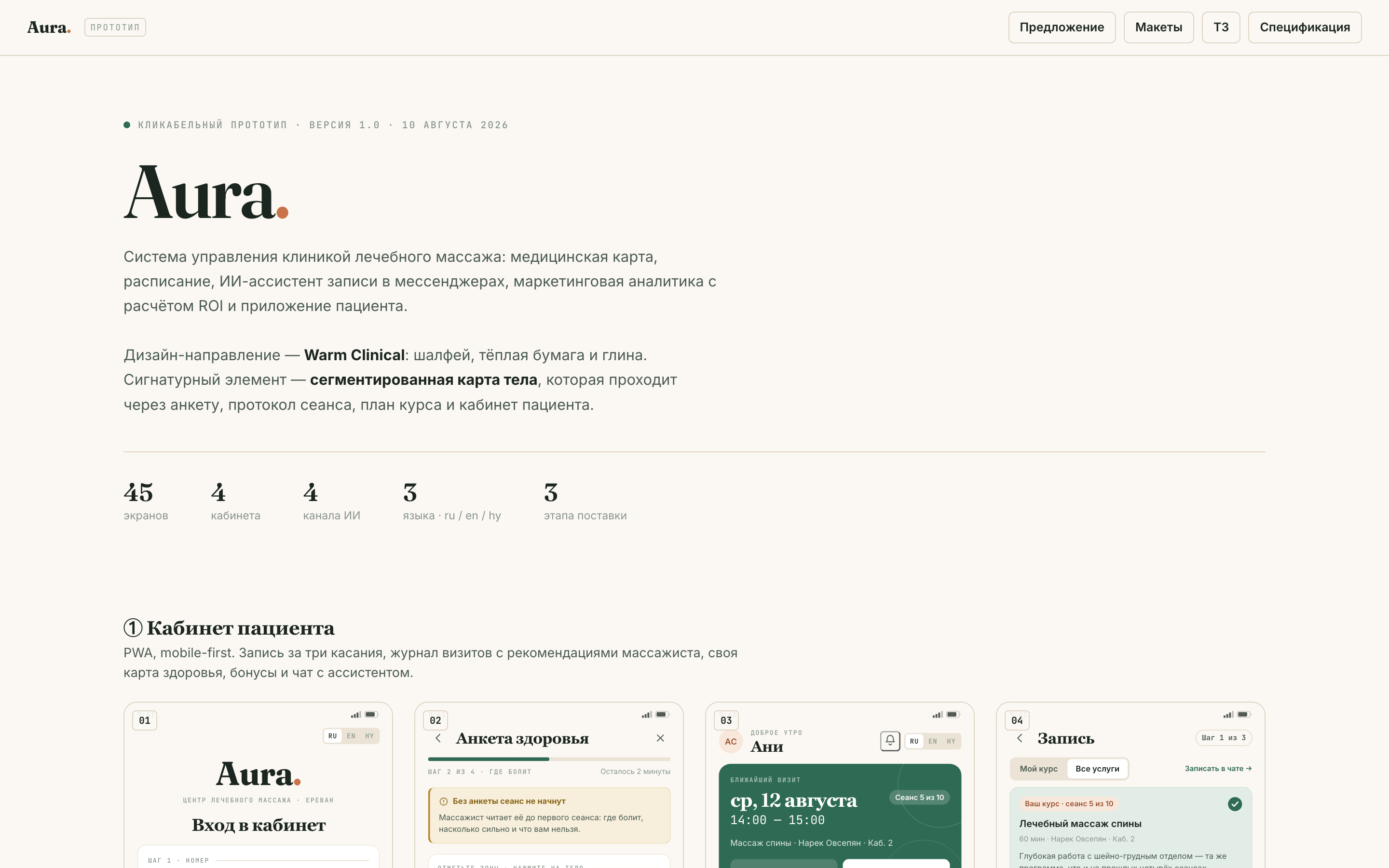
A medical CRM with AI-driven booking and a patient record built to be used.
One system for the schedule, the medical record, messaging-app booking and marketing — instead of four that never quite agree.
By the numbers
The problem
Bookings arrive in messaging apps and land in a paper diary. The receptionist sometimes puts two patients in the same hour. A patient's contraindications live in one therapist's head and disappear the moment somebody covers the session. Money goes out on advertising with nothing tying it back to revenue. What the clinic wanted was a single system in which scheduling, the clinical record and the finances all read from the same rows.
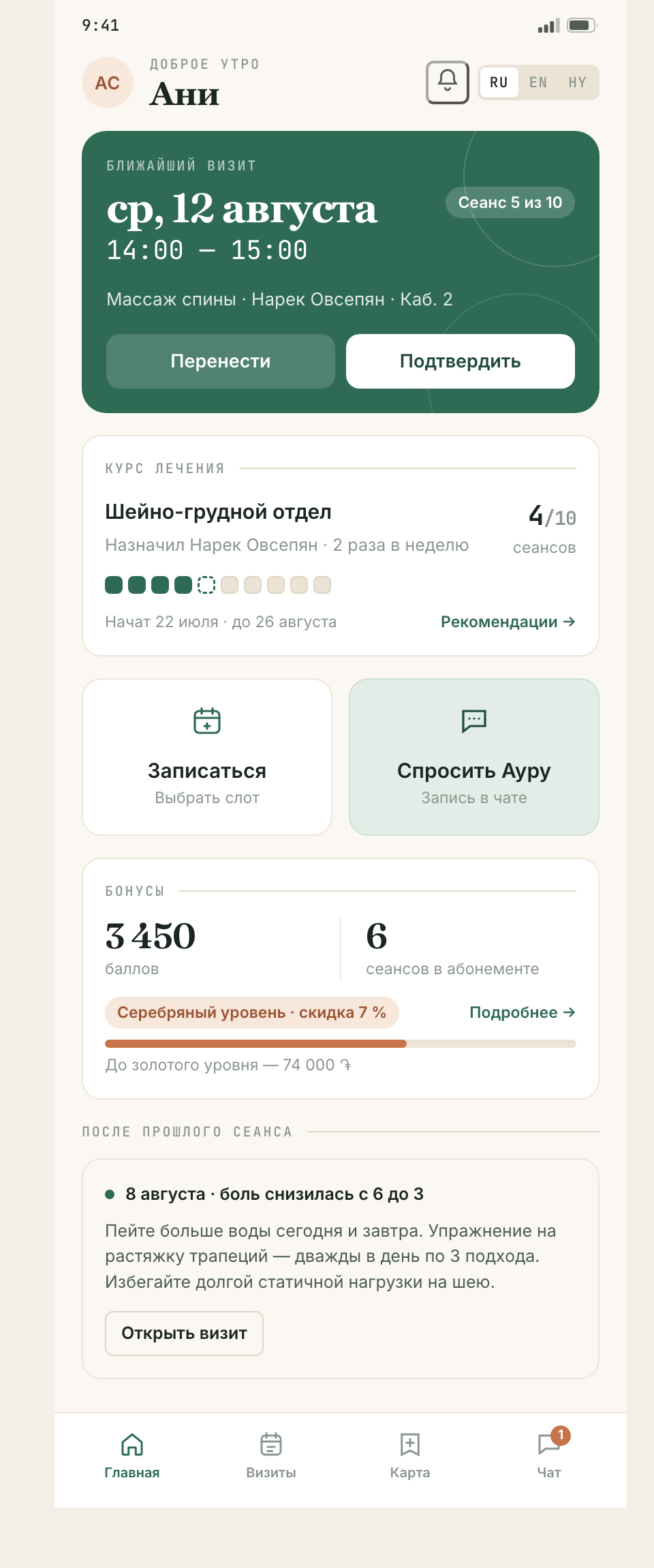
The requirements fought each other. Patients book at midnight, from the messaging app already open on their phone. Therapists need the history: questionnaire, red flags, what was done last time. The marketer needs campaign numbers and must never see a clinical field. Add three languages and Armenian drams. All of it had to be divided across roles and screens before development began, not after.
The solution
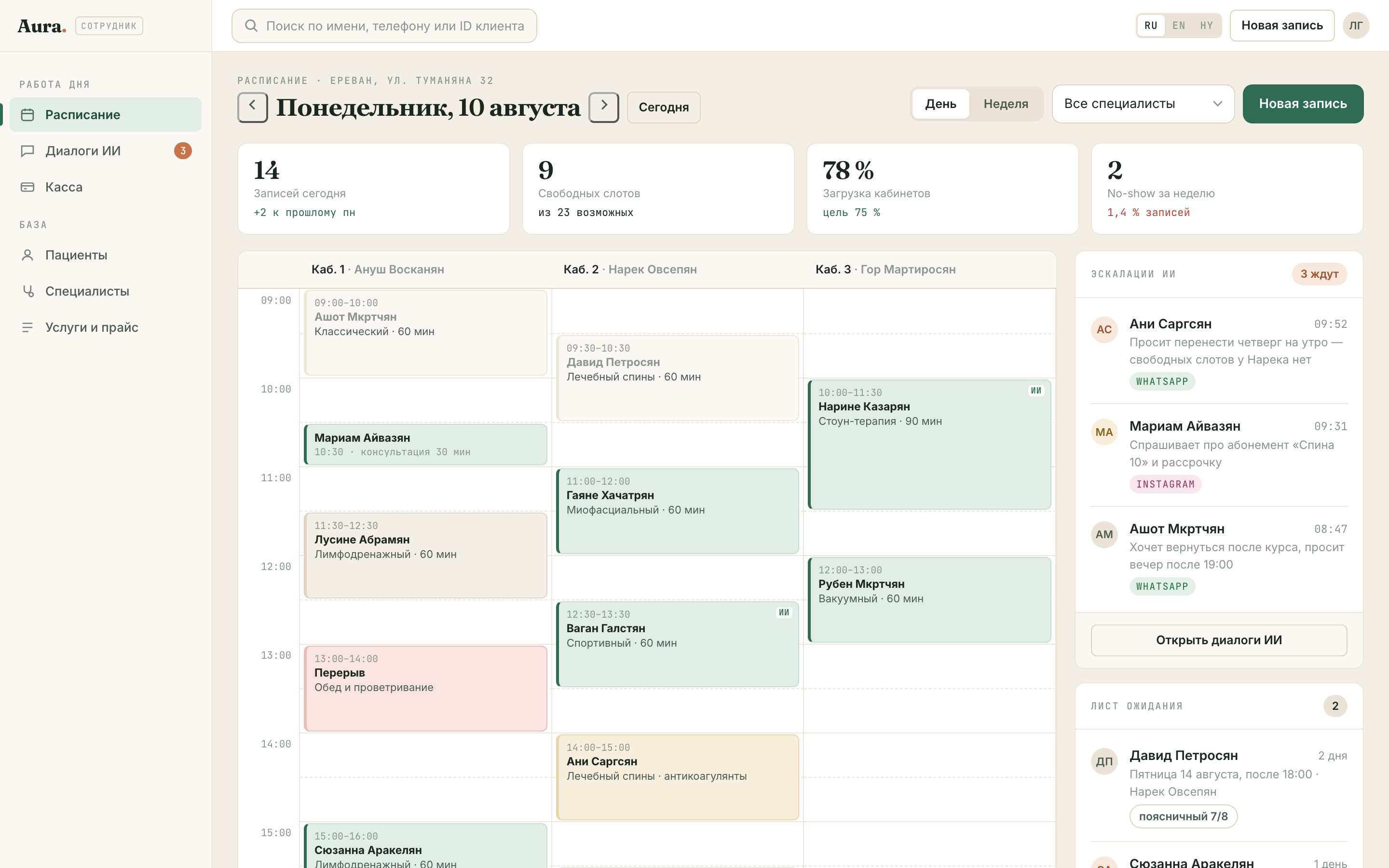
The schedule is the single source of truth. Claiming a slot runs an atomic conflict check, which makes a double booking impossible by construction instead of by agreement between receptionists.
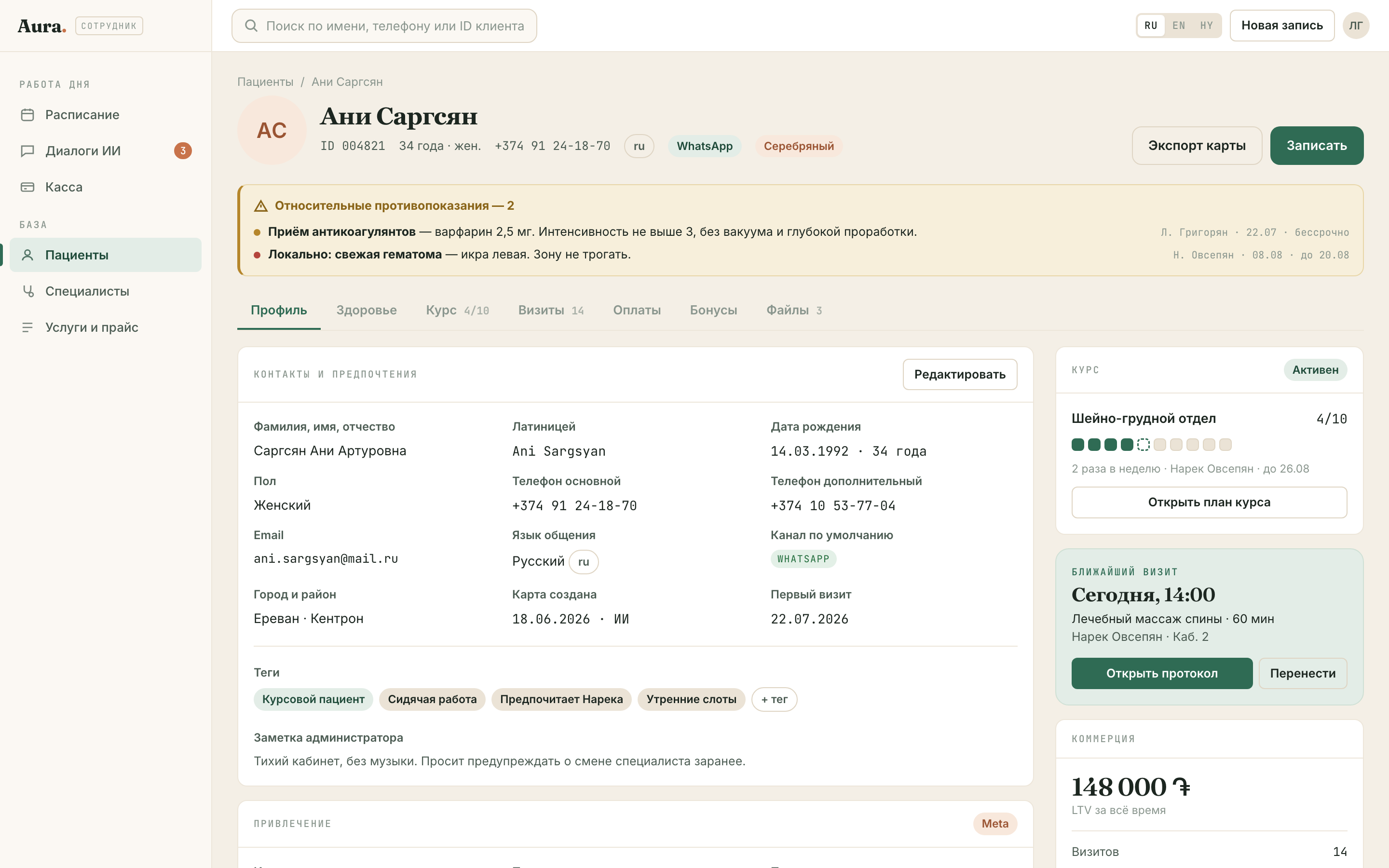
Red flags are records, not free text: each carries a class (absolute, relative, local), an expiry, an author and a date. They open the patient card as a banner, ahead of the tabs and the notes — alongside the health questionnaire, a clickable body map, the course plan and a SOAP protocol per session.
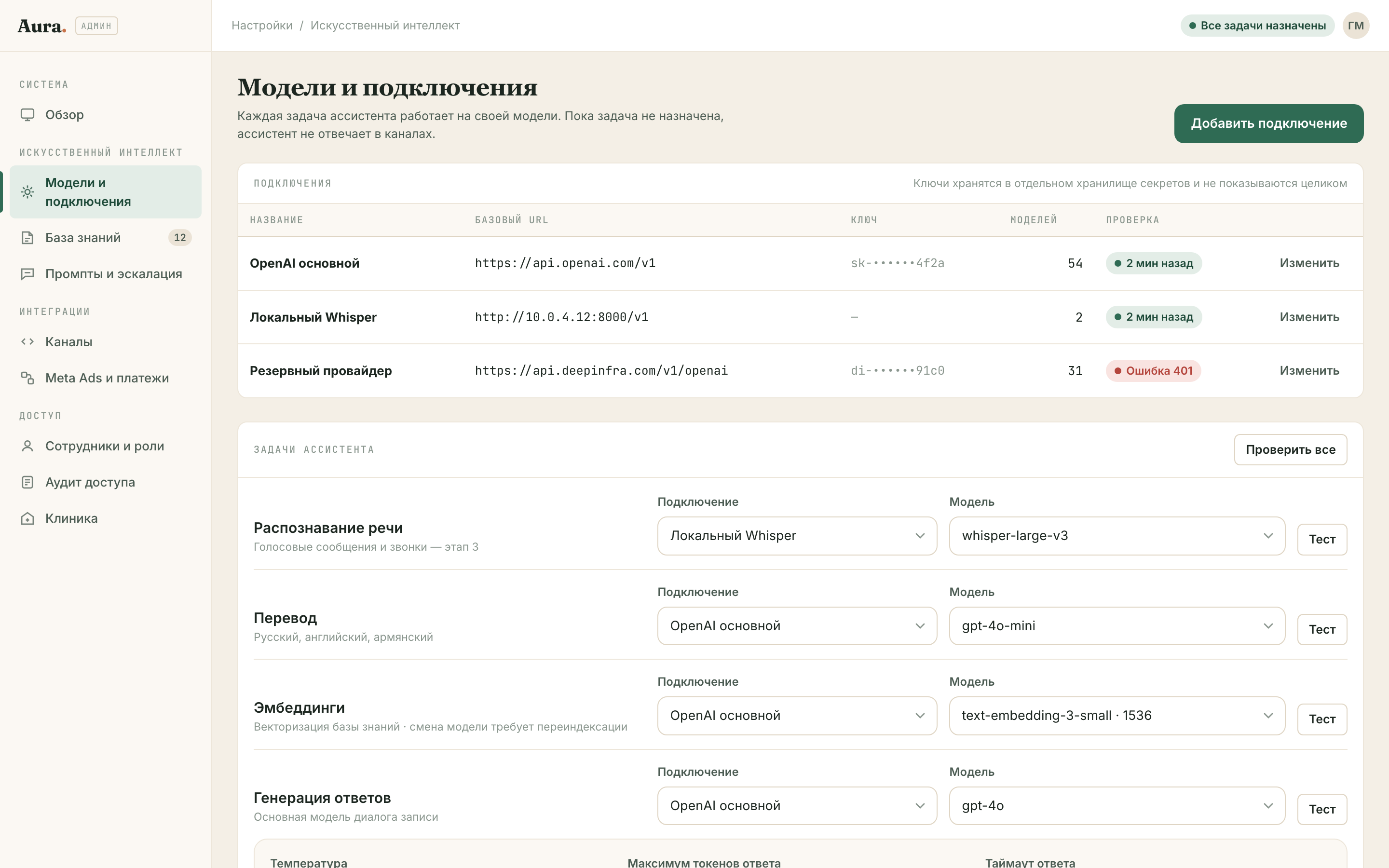
The AI assistant covers four channels around the clock. It identifies a patient by phone number and books through the same mechanism the receptionist uses; the bot gets no private path into the schedule. Absolute contraindications, medical questions, complaints and discount requests all go to a human.
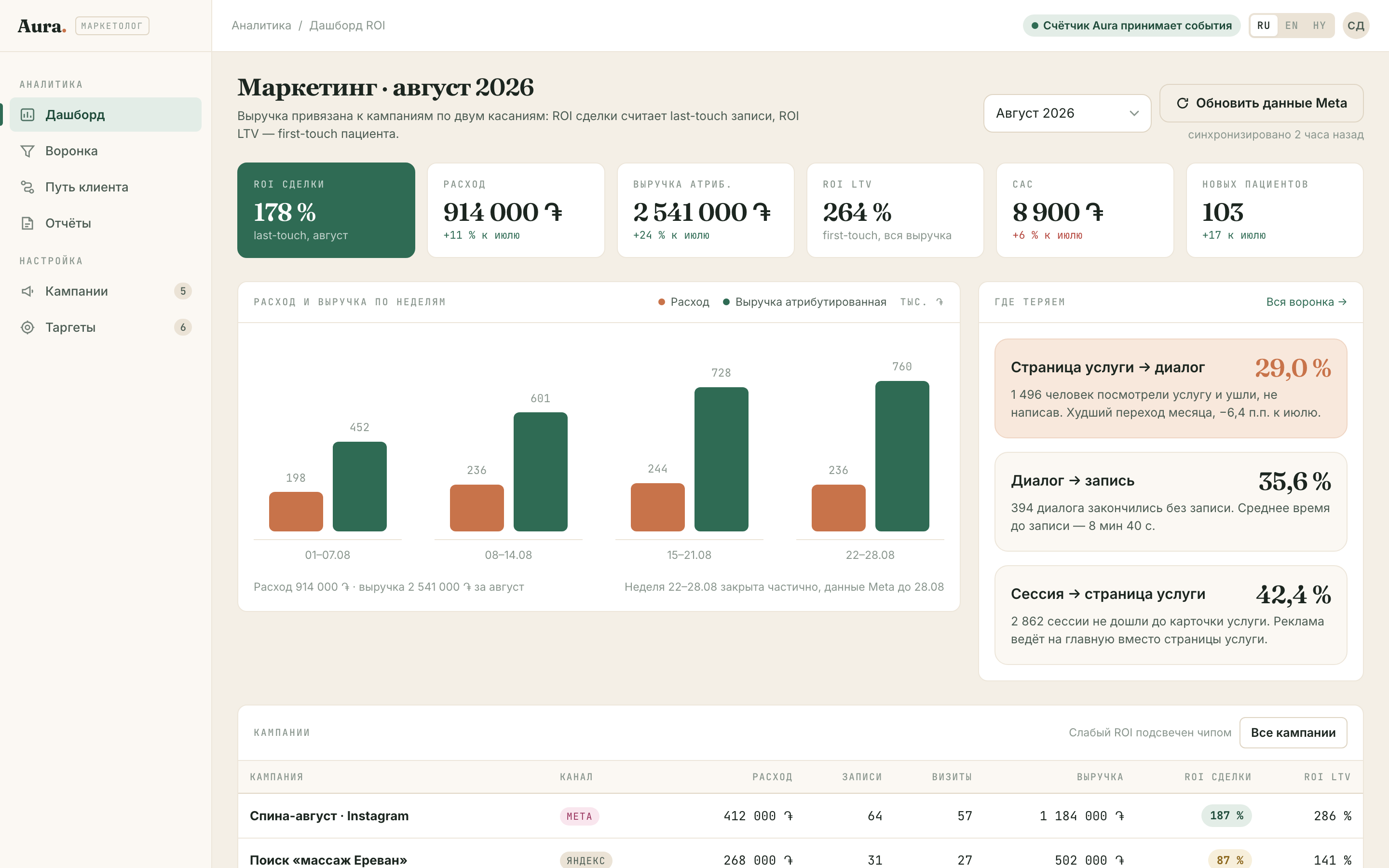
The marketer's portal cannot reach clinical data, in the interface or through the API. Attribution runs on de-identified booking and payment events.
Advertising is reported as two figures rather than one arguable one: deal ROI by last touch, LTV ROI by first touch. A campaign's immediate effect and its contribution over a patient's lifetime stay apart.
Screens